TL;DR:
- Panic attacks are sudden episodes of intense fear that peak within minutes and are usually not dangerous.
- Immediate coping involves slow breathing, grounding, and labeling the response to interrupt the panic cycle.
When a panic attack hits, do two things first: slow your breathing down to a steady diaphragmatic rhythm, and name three things you can see right now. That combination interrupts the fight-or-flight loop faster than almost anything else you can do in the first 30 seconds.
Here is a quick routine to start immediately:
- Breathe slowly: Inhale through your nose for 4 counts, hold for 1, exhale through your mouth for 6. Repeat.
- Ground yourself: Look around and name 3 things you see, 3 sounds you hear, 3 things you can touch.
- Label what is happening: Say to yourself, "This is my fight-or-flight response. It will pass."
- Stay where you are if it is safe to do so. Moving abruptly can intensify dizziness.
If you feel you might be having a medical emergency, call 911 immediately. For a mental health crisis, call or text 988 (Suicide & Crisis Lifeline, available 24/7).
The reassuring truth: panic attacks are genuinely distressing, but they are rarely physically dangerous. According to Cleveland Clinic, symptoms typically peak within 15–20 minutes as your body processes the adrenaline surge. Your goal right now is not to force calm. It is to stay present and let the wave pass.
Pro Tip: Save this page to your phone's home screen before you need it. Having the steps one tap away means you do not have to remember anything when your thinking is clouded.
What does a panic attack actually feel like?
A panic attack is a sudden surge of intense fear or physical discomfort that reaches its peak within minutes. It can feel terrifyingly physical: racing or pounding heart, shortness of breath, chest tightness, dizziness, tingling in the hands or face, and sometimes a strange sense that you are not quite real or that the world around you has gone flat (called derealization or depersonalization).
What is happening underneath those sensations is your nervous system firing a full-scale alarm. Your brain's amygdala detects a threat, real or perceived, and floods your body with adrenaline and cortisol. Your heart speeds up to pump blood to your muscles. Your breathing quickens to bring in more oxygen. Every symptom that feels so alarming is actually your body doing exactly what it was designed to do in a genuine emergency. The problem is that the alarm fires when there is no actual danger.
Clinically, a panic attack involves at least four of thirteen recognized symptoms (per the DSM-5-TR), including palpitations, sweating, trembling, chest pain, nausea, and fear of losing control or dying. Distinguishing a panic attack from generalized anxiety is practical, not just diagnostic: anxiety tends to build gradually around a specific worry, while a panic attack arrives fast, peaks hard, and fades. Both can coexist, and many people dealing with panic also carry a background hum of everyday anxiety.
Panic attack coping: your step-by-step in-the-moment routine
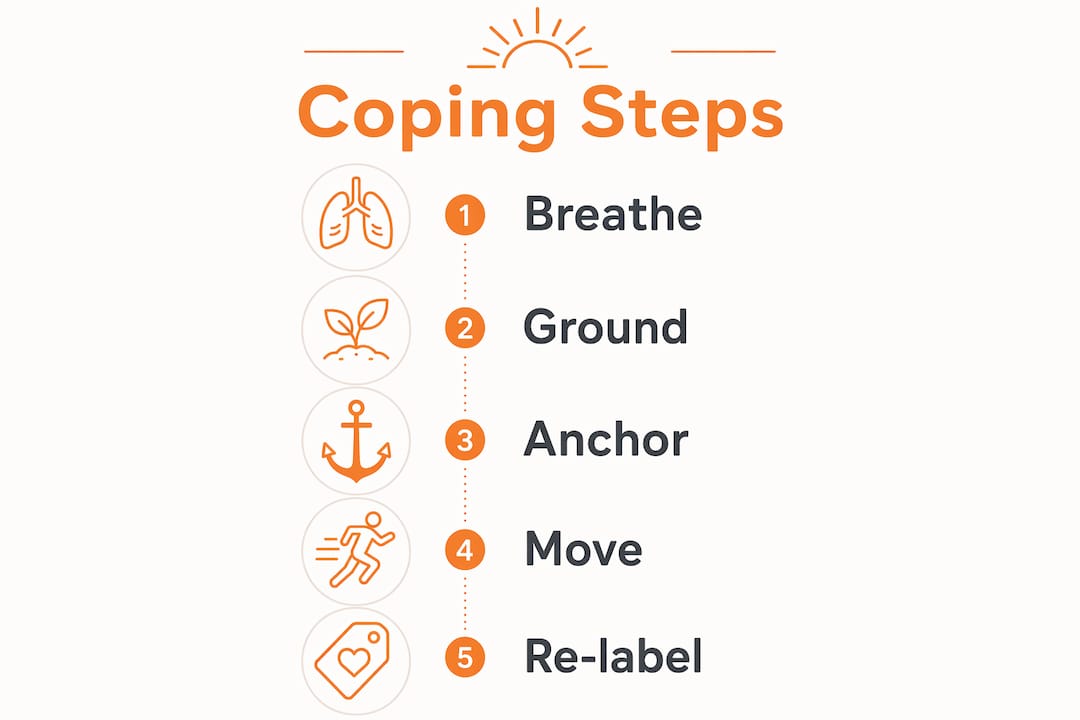
When you feel an attack starting, work through these four steps in order. You do not need to do all of them perfectly. Even one done well can reduce intensity.
Step 1: Diaphragmatic or box breathing
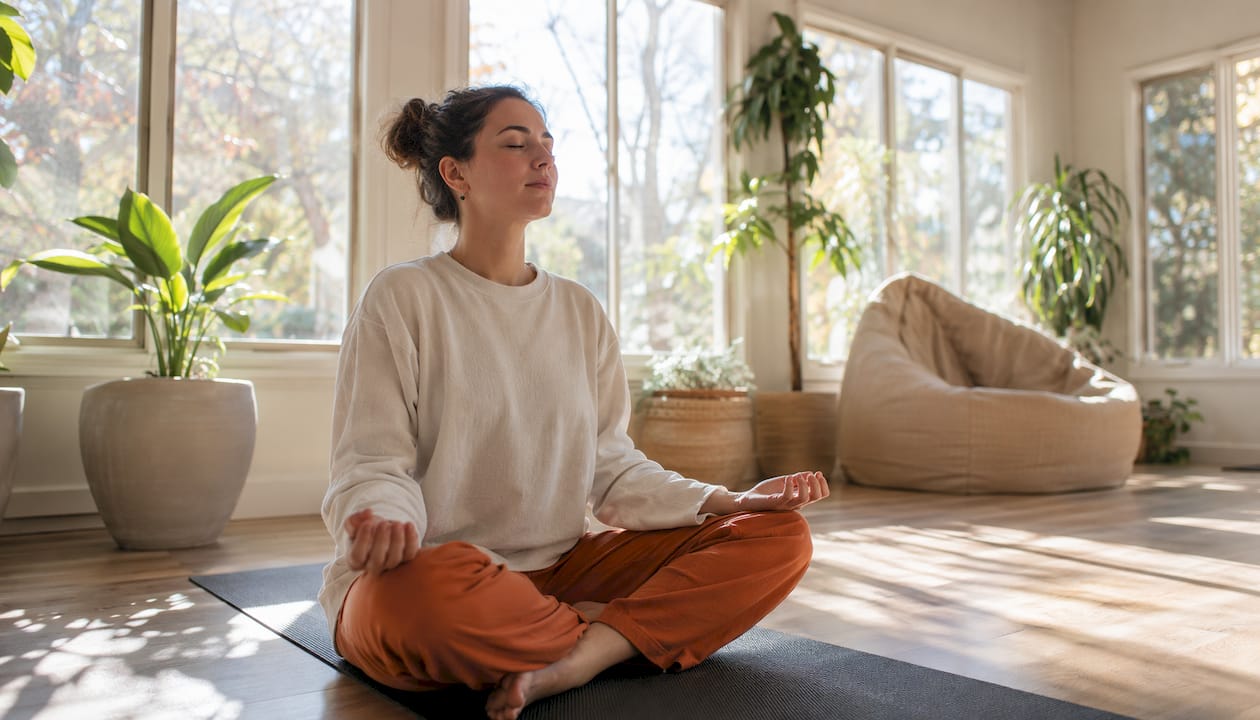
Shallow, rapid breathing feeds the panic loop. Slow it down deliberately.
- Place one hand on your belly, one on your chest.
- Inhale through your nose for 4 counts, letting your belly rise (not your chest).
- Hold for 1–2 counts.
- Exhale slowly through your mouth for 6–8 counts.
- Repeat for at least 5 cycles.
For box breathing: inhale 4 counts, hold 4, exhale 4, hold 4. Either works. Use whichever feels easier to remember.
Step 2: Grounding (5-4-3-2-1 or 3-3-3)
Grounding techniques pull your attention out of the spiral and into the present moment. The 5-4-3-2-1 method: name 5 things you see, 4 you can touch, 3 you hear, 2 you smell, 1 you taste. The simpler 3-3-3 version: 3 things you see, 3 sounds, 3 body parts you can move. Both are recommended by Harvard Health and NAMI for immediate coping.
Step 3: Sensory anchor
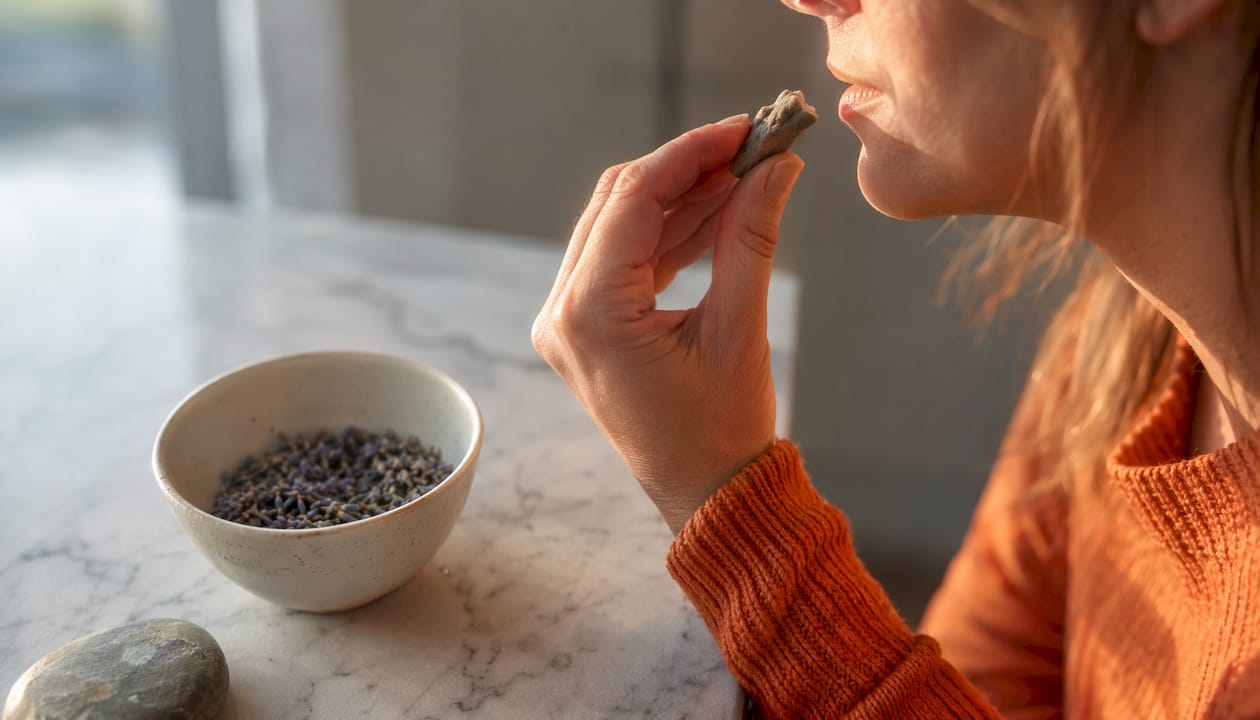
A sharp sensory input breaks the attention loop fast. Options: suck on a sour candy, smell peppermint oil or a strong lotion, splash cold water on your face or wrists, or hold an ice cube briefly. The physical sensation redirects your nervous system's focus.
Step 4: Light movement (if helpful)
If sitting still feels unbearable, slow walking or marching in place can help discharge the adrenaline. Keep it gentle. Avoid anything that raises your heart rate further, since that can mimic panic sensations.
What to say to yourself: Cognitive re-labeling reduces the secondary fear loop. Try: "This is adrenaline, not a heart attack. My body is safe. This will pass in minutes." You can also try reading song lyrics, counting backward from 100 by 7s, or naming every item in the room. Distraction is not avoidance here. It is a legitimate coping tool that gives your nervous system a moment to reset.
Pro Tip: Write your personal script now, while you are calm: "I feel [sensation]. This is fight-or-flight. I will breathe and wait." Save it as a phone note titled "PANIC." When an attack hits, open it and read it aloud.
How to build your personal panic plan
Practicing coping steps when you are calm is one of the highest-impact things you can do. Cleveland Clinic notes that pre-written scripts and rehearsed breathing work better during an actual episode because cognitive function becomes impaired under stress. You are essentially outsourcing your decision-making to your calmer self.
Your pocket panic kit includes:
- A one-sentence script (written, saved to your phone and a wallet card)
- A breathing reminder (4-in, 6-out, or box breathing counts)
- One sensory item (peppermint oil, sour candy, or a smooth stone)
- A small grounding card with the 3-3-3 steps
- Two emergency contacts (a trusted person plus 988)
Simple practice schedule: Spend 5–10 minutes twice a week running through your breathing and grounding steps. Do it when you are relaxed, not anxious. Think of it like a fire drill: the point is that the steps become automatic so you do not have to think during the real thing.
Pro Tip: Set a measurable goal, like reducing peak intensity from an 8 to a 5 on a 10-point scale, or shortening how long an attack lasts. Keep a brief log after each episode: date, duration, peak intensity, what helped. Patterns emerge quickly, and that data is genuinely useful to share with a therapist.
How to help someone having a panic attack
Watching someone you care about go through a panic attack can feel alarming. The most helpful thing you can do is stay calm yourself, because your nervous system genuinely influences theirs.
Do:
- Stay with them and make quiet, steady eye contact.
- Speak in a slow, low voice: "I'm right here. You're safe. This will pass."
- Offer grounding options gently: "Can you tell me three things you see?"
- Ask what they need rather than assuming.
- Sit with them in a quieter space if possible, without forcing a move.
Don't:
- Tell them to "calm down" or "just breathe" without showing them how.
- Minimize it ("it's nothing, you're fine") — that invalidates a real physical experience.
- Move them abruptly or crowd them.
- Force deep breathing without guidance; incorrect technique can worsen hyperventilation.
If they text you: A simple, grounding response works better than a long message. Try: "I'm here. You're safe. Can you name 3 things you see right now?" or "I've got you. Breathe with me: in for 4, out for 6." NAMI recommends behavioral anchors and simple physical prompts as effective first-aid approaches.
Safety note: If the person says they cannot breathe, loses consciousness, or you suspect a medical emergency, call 911 without hesitation. Panic attacks do not cause fainting or loss of consciousness; those symptoms need immediate medical evaluation.
When should you call 911 or go to the ER?
Panic attacks and cardiac or neurological events can feel similar. Knowing the difference matters.
Call 911 immediately if you or someone else experiences:
- Chest pain that radiates to the arm, jaw, or back
- Fainting or loss of consciousness
- Sudden severe difficulty breathing that does not ease with slow breathing
- Sudden weakness, numbness, or confusion (possible stroke signs)
- Symptoms that do not begin to ease within 20–30 minutes
For a mental health crisis without physical emergency, call or text 988 (Suicide & Crisis Lifeline). For guidance on emergency mental health care and what to expect from crisis services, that resource walks through the process clearly.
When you call 911 or arrive at an ER, describe your symptoms specifically: "I have chest tightness, rapid heart rate, and shortness of breath that started about 10 minutes ago." That language speeds triage and helps the team rule out cardiac causes quickly.
What are the best long-term treatments for panic attacks?
Short-term coping gets you through an episode. Long-term treatment reduces how often they happen and how much you fear them.
Cognitive Behavioral Therapy (CBT) is the clinical gold standard. It works in two main ways: cognitive restructuring (changing how you interpret panic sensations) and interoceptive exposure (gradually recreating mild panic sensations in a controlled setting so your nervous system learns they are not dangerous). Most people see meaningful improvement within 12–20 weekly sessions. The NHS also recommends CBT as the first-choice talking therapy for panic disorder.
A key part of CBT is removing "safety behaviors," the avoidance patterns that keep panic alive. Avoiding the gym because your heart rate rises, skipping crowded places, always sitting near exits — these behaviors feel protective but reinforce the brain's belief that the sensations are genuinely dangerous.
| Treatment approach | Onset of benefit | Typical duration | Primary goal |
|---|---|---|---|
| CBT (therapy-focused) | 4–8 weeks | 12–20 sessions | Reduce frequency, eliminate avoidance |
| Medication-assisted (SSRIs/SNRIs) | 4–6 weeks | 6–12 months or longer | Lower baseline anxiety, reduce attack intensity |
| Combined (CBT + medication) | 2–6 weeks | Individualized | Faster symptom relief plus lasting skill-building |
| Short-term benzodiazepines | Days | Weeks only (dependence risk) | Acute symptom relief during crisis period |
Questions to ask a clinician:
- "Is this panic disorder, or are attacks part of another anxiety condition?"
- "Do you use interoceptive exposure in your CBT work?"
- "How will we measure progress, and what does improvement look like at 8 weeks?"
- "If medication is recommended, what is the plan for tapering eventually?"
If panic attacks are interfering with daily life or increasing in frequency, that is a clear signal to seek professional evaluation rather than managing alone.
Which daily habits actually reduce panic frequency?
Lifestyle changes are not a replacement for therapy, but they meaningfully lower your baseline arousal, which is the physiological ground from which panic attacks grow. Mayo Clinic identifies consistent sleep, regular aerobic exercise, and avoiding caffeine, alcohol, and nicotine as foundational to any comprehensive treatment plan.
Here is a practical weekly target to work toward:
- Sleep: 7–9 hours at consistent times. Irregular sleep schedules raise cortisol and lower your threshold for panic.
- Exercise: 3–5 sessions of moderate aerobic activity (30 minutes of brisk walking counts). Exercise metabolizes excess adrenaline and reduces baseline anxiety over weeks.
- Caffeine: Keep it under 200 mg daily (roughly one 12-oz coffee). Caffeine directly stimulates the sympathetic nervous system and can trigger or worsen attacks.
- Alcohol and nicotine: Both disrupt sleep architecture and increase anxiety rebound. Reducing or eliminating them typically produces noticeable changes within 2–4 weeks.
- Daily breathing or mindfulness practice: Even 5 minutes of slow breathing each morning lowers resting heart rate variability over time.
For more on calming an anxious mind naturally, including specific strategies for sleep and nervous system regulation, that resource goes deeper on the habits that matter most.
Pro Tip: Attach new habits to existing ones. Do your 5-minute breathing practice right after you brush your teeth in the morning. Behavior science calls this "habit stacking," and it dramatically improves follow-through compared to scheduling habits in isolation.
What does working with a therapist for panic actually look like?
Many people hesitate to start therapy because they are not sure what happens in the room. Here is a realistic picture of a CBT-focused trajectory for panic.
Assessment (sessions 1–2): Your therapist will ask about when attacks started, what triggers them (or whether they seem to come out of nowhere), how you respond, and what you avoid. They will also ask about sleep, substances, medical history, and any other anxiety. This is not an interrogation. It is a map-building exercise.
Skills training (sessions 3–8): You will learn the breathing and grounding techniques described above, plus cognitive restructuring: how to catch catastrophic thoughts ("I'm dying") and replace them with accurate ones ("This is adrenaline. I've survived this before"). Homework between sessions is real and matters. Five to ten minutes of practice daily is typical.
Exposure practice (sessions 8–16): This is where lasting change happens. Your therapist will guide you through interoceptive exposure, deliberately recreating mild panic sensations (spinning in a chair, breathing through a straw) in a controlled way so your nervous system learns those sensations are not dangerous. It sounds counterintuitive, but it works.
Maintenance: Once attacks reduce in frequency and intensity, sessions taper. You will have a relapse plan and a set of skills that belong to you permanently.
Pro Tip: Ask your therapist in the first session: "What will homework look like between sessions?" A good CBT therapist will have a clear answer. Practice between sessions is where most of the progress actually happens.
Sunshinecitycounseling offers CBT-informed individual therapy, therapy intensives, and telehealth sessions for adults and teens in Florida. An initial consultation is a low-pressure way to ask questions and see whether the fit feels right.
Key Takeaways
Panic attacks are distressing but not dangerous, and the most effective approach combines immediate coping skills, consistent practice, and evidence-based treatment to reduce both frequency and fear.
| Point | Details |
|---|---|
| Use breathing and grounding first | Diaphragmatic breathing (4 in, 6 out) and the 3-3-3 grounding method are your fastest tools during an acute episode. |
| Symptoms peak and pass | Panic attacks typically peak within minutes as adrenaline clears; staying present and waiting is a valid clinical strategy. |
| Practice when calm | Rehearsing breathing and a pre-written script twice weekly makes coping automatic when cognition is impaired during an attack. |
| CBT is the gold standard | Cognitive Behavioral Therapy, including interoceptive exposure, produces lasting reduction in attack frequency over 12–20 sessions. |
| Sunshinecitycounseling | Offers CBT-informed individual therapy and telehealth in Florida for adults managing panic, anxiety, and related concerns. |
What I've seen work, and what people underestimate
People who come to therapy for panic attacks often arrive having already tried breathing exercises and grounding techniques on their own, with mixed results. They wonder if they are doing it wrong. Usually, they are not. The techniques work. What is missing is the exposure piece.
The part most self-help content skips is that coping skills alone, however well-practiced, do not fully resolve panic disorder. They manage the wave. What stops the waves from coming as often is learning, at a nervous-system level, that the sensations themselves are not the threat. That is what interoceptive exposure does, and it is genuinely uncomfortable to practice. Spinning in a chair until you feel dizzy, on purpose, with a therapist, is not most people's idea of a good Tuesday. But the research behind it is solid, and the relief people feel afterward is real.
The other thing worth saying plainly: the fear of the next panic attack, what clinicians call anticipatory anxiety, often causes more daily suffering than the attacks themselves. Avoiding the gym, the highway, the crowded restaurant, the job interview. That narrowing of life is where panic does its real damage. Therapy addresses that directly. Coping skills help you survive an episode. Therapy helps you stop organizing your life around avoiding one.
If attacks are frequent, disabling, or you have started avoiding places and situations, that is the moment to reach out. Not because you cannot handle it, but because you do not have to handle it alone.
Panic attacks don't have to run your schedule
Sunshinecitycounseling provides CBT-informed individual therapy for adults and teens in St. Petersburg, FL, with telehealth available throughout Florida. Sessions address panic, anxiety, trauma, and the avoidance patterns that keep symptoms locked in place. Therapy intensives are available for people who want to move faster than weekly sessions allow, and perinatal mental health support is offered for new and expecting mothers navigating anxiety alongside major life transitions.
Sunshinecitycounseling operates on a private-pay model, with session packages available to make consistent care more manageable. Your first appointment is a conversation: your therapist will ask about your experience, explain the approach, and answer your questions. No pressure, no jargon, and no expectation that you arrive with everything figured out.
To learn more or schedule a consultation, visit Sunshine City Counseling and take the first step toward fewer attacks and a wider life.
Useful sources and further reading
Trusted resources for learning more or sharing with a clinician:
- Mayo Clinic: Panic Attacks and Panic Disorder — Detailed clinical overview of diagnosis, treatment options (CBT, medication), and what to expect from care.
- Harvard Health: Recognizing and Managing Panic Attacks — Evidence-based guidance on immediate coping and when to seek professional evaluation.
- Cleveland Clinic: How to Stop a Panic Attack — Practical, step-by-step techniques with clinical context on timing and adrenaline.
- NAMI: Helping Yourself or a Friend During a Panic Attack — Nonprofit resource with behavioral anchors and support scripts.
- Medical News Today: Panic Attack Techniques — Accessible overview of grounding, breathing, and sensory distraction methods.
- NHS: Panic Disorder — UK clinical guidelines covering CBT, medication, and self-help strategies (note: UK context, but the clinical recommendations align with US practice).
- Sunshinecitycounseling — St. Petersburg, FL practice offering individual therapy, telehealth, and therapy intensives for panic, anxiety, and related concerns.
- 988 Suicide & Crisis Lifeline — Call or text 988 for immediate mental health crisis support anywhere in the United States.
FAQ
What is the 3-3-3 rule for panic attacks?
The 3-3-3 rule is a quick grounding technique: name 3 things you see, identify 3 sounds you hear, and move or touch 3 parts of your body. It pulls attention into the present moment and interrupts the panic spiral.
How do you break a panic cycle?
Breaking the cycle requires two things: short-term coping skills (breathing, grounding) to manage acute episodes, and longer-term exposure work through CBT to reduce the fear of panic sensations themselves. Avoidance keeps the cycle running; facing feared sensations gradually, with support, is what ends it.
What should you do if someone is having a panic attack?
Stay calm, stay with them, and speak slowly: "I'm here, you're safe, this will pass." Offer a grounding prompt gently, and avoid telling them to "just calm down." If they lose consciousness or symptoms suggest a medical emergency, call 911 immediately.
What do you text someone having a panic attack?
Keep it short and grounding: "I'm here. You're safe. Can you name 3 things you see?" or "Breathe with me: in for 4, out for 6. I've got you." Simple, present-tense language works better than long reassurances when someone is mid-episode.
Is it a panic attack or an anxiety attack?
Panic attacks arrive suddenly, peak fast (within minutes), and involve intense physical symptoms. Anxiety tends to build gradually around a specific worry and feels more like sustained dread than a physical surge. Both can coexist, and a clinician can help clarify which pattern you are experiencing.